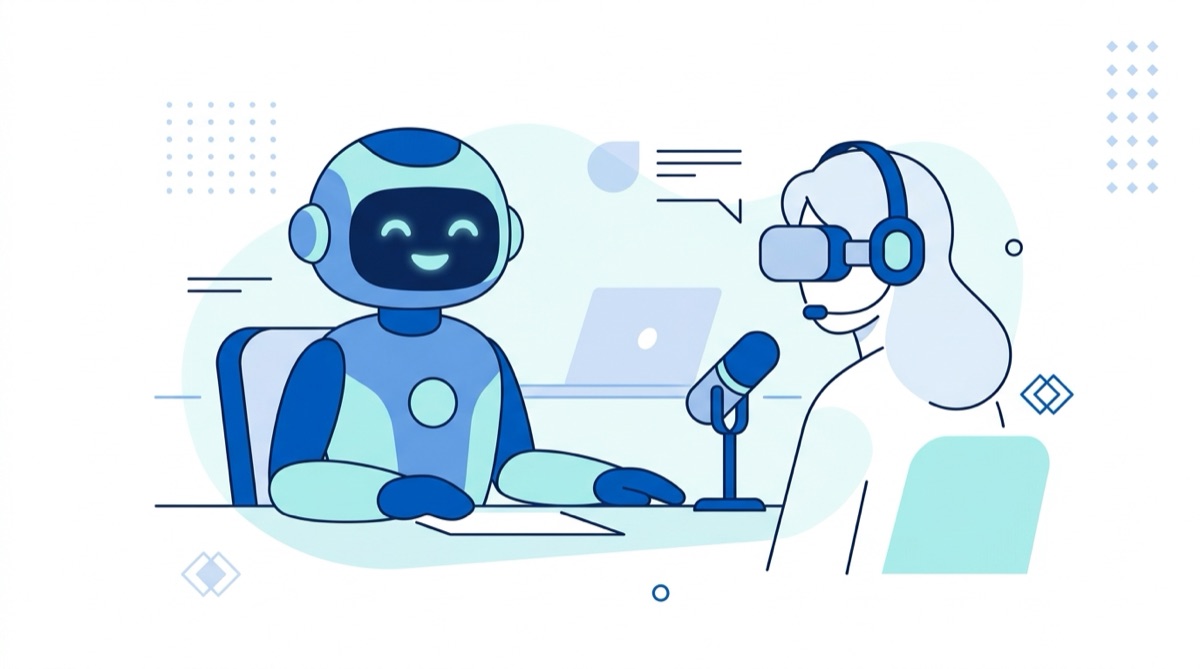
AI mock interviews are having a moment, and most of the "does it work?" debate misses the point. A treadmill works if you run on it. The tool isn't magic — it removes every excuse not to get realistic reps. Here's how to make those reps count, plus two things people rarely mention: how to read AI feedback critically, and what happens to your data.
1. Treat it like the real thing
Camera on, out loud, no restarting when you fumble. If you pause and re-script every answer, you're writing, not interviewing — and writing doesn't rehearse the nerves. The value is in simulating pressure, so let it be a little uncomfortable.
2. Actually read the feedback
The point isn't the score; it's the why. A report showing you rambled on question three, or gave a weak result in your practice story, is a to-do list. Most people glance at the number and skip the gold underneath.
3. Re-run what you bombed
The highest-leverage move: immediately redo the question you blanked on. Same question, again, until it stops scaring you. That's targeted desensitisation, and it's where confidence actually comes from.
4. Compare against a model answer
Seeing the answer a strong candidate would give — next to yours — is how you close the gap fast. You learn not just that an answer was weak, but specifically what "good" looks like.
5. Space your reps
Five sessions over a week beat five in one panicked evening. Spacing is how the calm sticks. (For the "how many" question, see how many mocks before the real one.)
After your next mock, pick the single lowest-scoring answer and re-run only that question three times back to back. Don't move on until the third attempt feels boring. One deep rep beats five shallow ones.
Tailor the reps to the actual role
Generic practice builds generic readiness. The reps that move the needle are the ones aimed at the specific interview you're walking into, so point the tool at the real target.
Feed the mock:  the job description (paste it in)
                the role + seniority you're targeting
                the round type (screen, behavioural, technical, panel)
Then drill:     the 3 questions this role is most likely to ask
                the 1 story you keep fumbling
                the follow-up you dread ("why the gap?", "why leave?")
A behavioural round and a system-design round reward completely different reps. If you're prepping something technical, the win is narrating your reasoning out loud, not just reaching the answer — the same muscle a live copilot never builds.
Treat AI feedback as guidance, not gospel
Here's the part the marketing won't tell you: AI feedback is useful, but it isn't an oracle. It can be generic, occasionally wrong, and it reflects patterns in its training — which means it can carry bias about what a "good" answer sounds like. Use it as a sharp second opinion, not a verdict.
An AI report dings your answer as "too brief." But you were answering a yes/no screening question where brevity was correct. The feedback spotted a real pattern (you tend to under-explain) and misapplied it here. Keep the insight, bin the specific call.
Optimising for the score instead of the job. If you start shaping every answer to please the model, you're training for the tool, not the interview. The score is a compass, not the destination.
Cross-check anything that surprises you against a human you trust — a mentor, a friend in the field, a past interviewer. The AI is fast and tireless; a person who knows your industry catches the things it can't.
Where AI feedback genuinely shines is the mechanical stuff it can measure consistently: whether you rambled, whether your STAR story actually had a result, whether you answered the question that was asked. Where it's weakest is judgment calls that depend on context it doesn't have — your industry's norms, this specific team's culture, the fact that a terse answer was exactly right for a rapid-fire screen. Lean on it for the former, stay sceptical on the latter.
Mind your data
You're often asked to upload a resume, paste a job description, or record your voice and face. That's real personal data. Before you hand it over, it's worth a two-minute check on where it goes.
- Skim the tool's privacy policy: is your data used to train models, and can you opt out?
- Check whether recordings are stored, for how long, and whether you can delete them.
- Redact anything you don't need to share — home address, ID numbers, a current employer's confidential details.
- Prefer tools that let you delete your account and data outright.
- Be extra careful uploading anything covered by an NDA or your current job.
The honest bottom line
Used passively, an AI mock interview is a fancy quiz. Used like a gym — real effort, feedback read with a critical eye, the hard sets repeated — it does the one thing reading can't: it makes the real interview feel like something you've already done. That's the entire value, and it's a lot. If you're still deciding between practising beforehand and a live copilot, the side-by-side comparison makes the choice obvious.
Turn reps into real readiness
Run realistic voice mock interviews, get a scored report and a model answer for every question, and re-run the ones you fumble. Free to start — no credit card.
Start freeFrequently asked questions
How do I get the most out of AI mock interviews?
Treat each one like the real thing (out loud, no restarts), read the feedback rather than just the score, immediately re-run questions you bombed, compare against the model answer, and space your sessions across days. Then sanity-check any surprising feedback against a human who knows your field.
Is AI interview feedback always accurate?
No. It's a useful second opinion, not an oracle — it can be generic, sometimes wrong, and it reflects biases in its training about what 'good' sounds like. Keep the patterns it spots, question the specific calls, and cross-check anything surprising with a person you trust.
Is it safe to upload my resume and recordings to an AI interview tool?
Usually, but do a quick check first: read the privacy policy for whether your data trains models, whether recordings are stored and deletable, and redact anything sensitive. Be especially careful with NDA-covered or current-employer information.